Naturally carbon positive
Home » Sustainability » Naturally carbon positive
A natural fit for a changing world
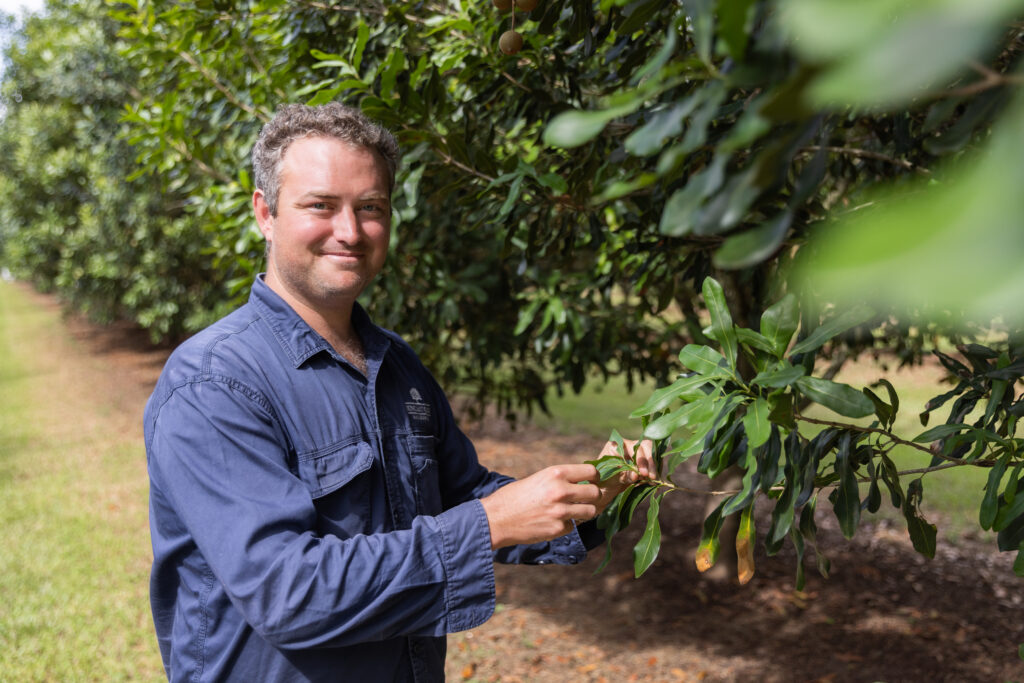
Australia is home to more than 15 million macadamia trees1 growing across 47,600 hectares. Every one of these trees is helping remove carbon dioxide from the atmosphere, day and night, all year round.
Macadamia trees are especially well suited to storing carbon because of their size, dense canopy and long lifespan. Compared with many other crops, they are able to hold considerable amounts of carbon in their trunks, branches, leaves and root systems over many years. This means macadamia orchards are doing more than producing a premium nut. They are also helping capture and store carbon naturally as they grow.
Research shows the average Australian macadamia orchard sequesters more than 17.6 tonnes of carbon dioxide equivalent per hectare each year from the trees2 alone. That is before taking into account the additional carbon stored in the soil, inter-row plantings and biodiversity zones that form part of many orchards. This makes macadamia farming part of a broader natural cycle, where trees absorb carbon from the air and store it within the orchard system over time. It is one of the reasons macadamias have such a compelling sustainability story.
Carbon storage starts in the soil
Carbon is not only stored in the trees themselves. Healthy soil is also a powerful carbon store, and Australian macadamia growers work hard to build and protect it.
Across the industry, organic materials such as macadamia husks, shells, mulch and tree prunings are returned to orchard systems wherever possible. As these materials break down, they help build soil organic matter and support a rich community of microbes below the surface. This allows more carbon to be held in stable soil structures rather than being released back into the atmosphere.

These healthier soils deliver a range of benefits. They improve soil structure, help the ground hold onto moisture, support nutrient cycling and create better growing conditions for the trees. In other words, storing carbon in the soil is not just good for the environment. It also helps strengthen the orchard as a whole.
Regeneration from the ground up
Many Australian macadamia growers use regenerative farming practices to support long-term soil health and biodiversity. This often includes planting a diverse mix of grasses, legumes, brassicas and flowering plants between orchard rows and around the farm.
These plantings do more than add greenery. They help protect the soil surface, feed soil biology, reduce erosion and encourage natural nutrient cycling. As roots grow and organic matter is returned to the ground, the orchard floor becomes more active, more resilient and better able to store carbon over time.
Growers increasingly see soil as a living ecosystem, not simply something that holds the trees in place. Beneath the surface is a complex world of bacteria, fungi and micro-organisms working together to support plant health, water retention and carbon storage. In fact, there is more biodiversity below ground than above it.
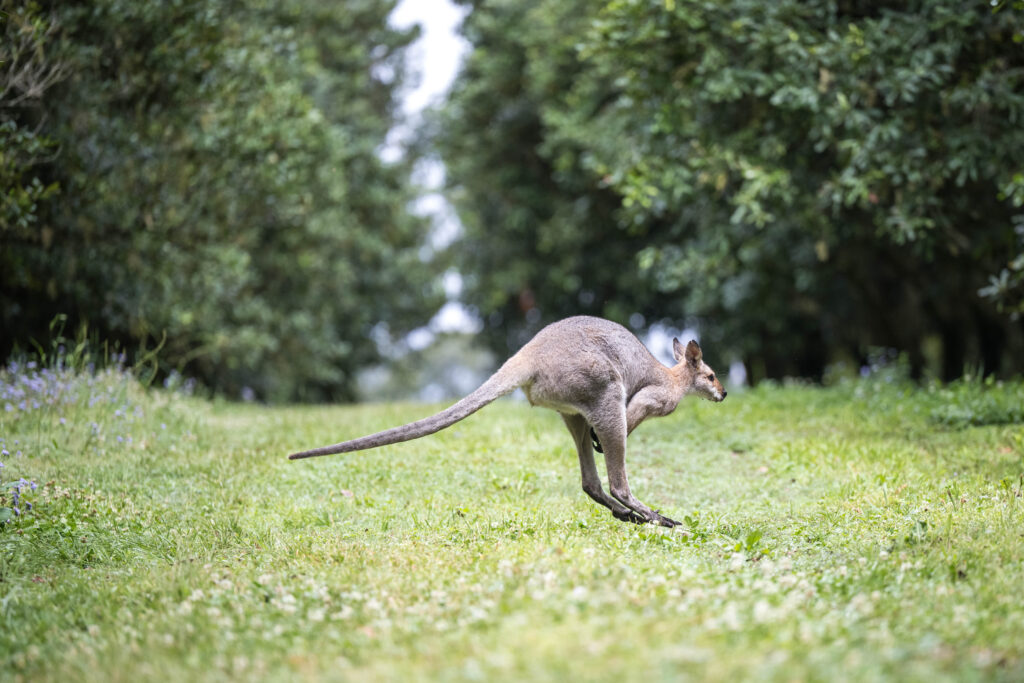
By building this underground ecosystem, growers are creating orchard floors that function more like a rainforest floor. They absorb rainfall more effectively, slow runoff, buffer temperature extremes and cycle nutrients naturally. Over time, this helps create orchards that are more self-supporting, more resilient and better prepared for a changing climate.
A long-term approach to resilience
Because macadamia trees are a permanent crop with a long productive life, the carbon benefits of an orchard can build over many years. This long-term approach fits naturally with the way Australian growers think about stewardship. Healthy trees, healthy soils and healthy ecosystems all work together to support productive orchards for generations to come.
By combining the natural carbon-storing ability of the macadamia tree with practices that build living soils, Australian growers are creating farming systems that are both productive and future-focused.
1. Australian Tree Crop Map, built and maintained by the Applied Agricultural Research Centre at the University of New England
2. Murphy Tim, Graham Jones, Jerry Vanclay, Kevin Glencross; (2013) Agroforest Syst 87:689-698. Preliminary carbon sequestration modelling for the Australian macadamia industry.

 English
  Chinese