Promoting biodiversity
Home » Sustainability » Promoting biodiversity
Biodiversity is key to macadamia farms being able to grow the decadent nuts we all love as well as to help protect and preserve the natural environment that sustains the industry.
Where orchards become ecosystems
Macadamia orchards are more than just places where trees grow. They are living, breathing ecosystems designed to work in harmony with nature.
The trees themselves provide food and shelter for a wide variety of species, from insects and birds to small mammals. Around and between the rows, growers are creating rich, diverse environments that support life both above and below the ground.
What were once simple access rows are now thriving ecological zones. Growers plant a mix of grasses, legumes and flowering plants between trees, along with native vegetation around orchard boundaries. This diversity helps build healthier soils, supports pollinators, and creates natural habitats for beneficial insects and wildlife.
These beneficial species play an important role in keeping orchards balanced. Pollinators help ensure strong yields, while natural predators reduce pest populations. Over time, this creates a more stable system that relies less on intervention and works more with nature.¹
Leading the way by working with nature
Many growers across the industry are embracing regenerative practices that put nature at the centre of how they farm.
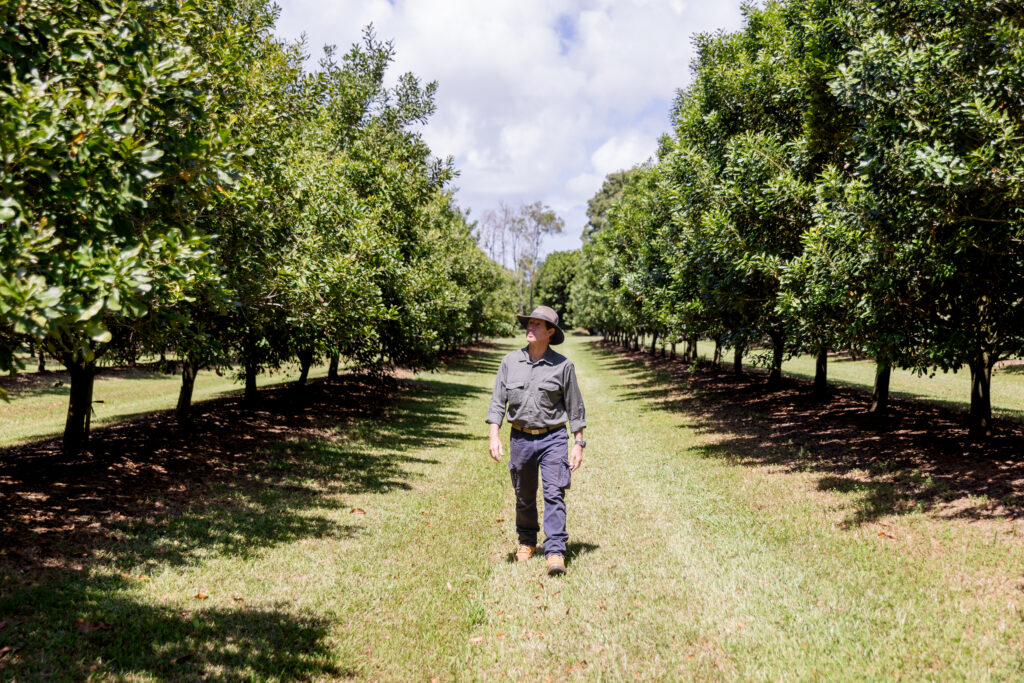
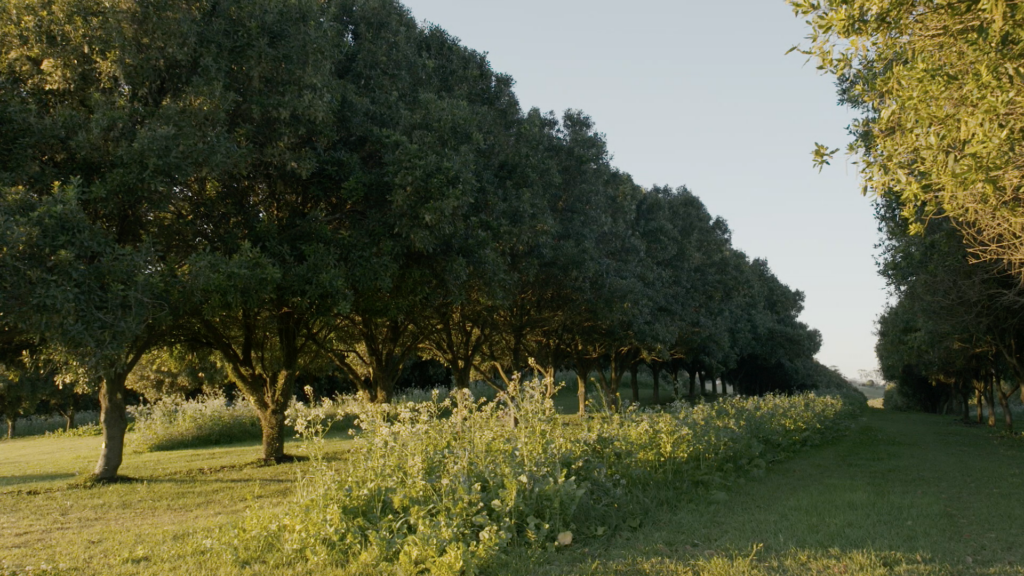
Macadamia grower Rex Harris is one of those leading the way. His commitment to biodiversity is so strong that he removed every second row of trees in his orchard to create space for birds, bees and other wildlife.
“We are converting our orchard from a monoculture to a polyculture. So now, the orchard is alive with insects… beneficial insects and butterflies, and we’re seeing a lot more bird life in the orchard too,” says Rex. “It’s just so much more enjoyable to farm this way.”
Soil is the key
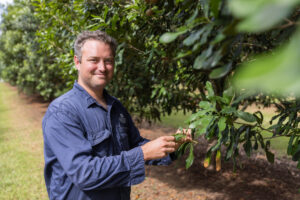
In northern New South Wales, grower Ross Arnett is also focused on building a more natural, balanced system. On his farm in the Alstonville Plateau, soil health and biodiversity go hand in hand.
“Soil is the key to good farming practices,” he says. “I use compost to feed the soil biology and grow healthy soil, which leads to healthy trees. Healthy trees have fewer pest and disease problems. Better soils make better trees.”
Like Rex, Ross uses lower-growing cover crops and shrubs within his orchard to provide habitat for insects and birds. Around the edges, he plants taller vegetation to support the natural predators of macadamia pests. “It’s a complex, natural arrangement that all works beautifully,” he says.
Supporting life below the surface
Biodiversity in macadamia orchards goes far beyond what you can see. Beneath the soil, a complex and active ecosystem is at work. Healthy soils are rich with bacteria, fungi and micro-organisms that break down organic matter, cycle nutrients and help trees access what they need to grow.
By encouraging plant diversity above ground, growers are also nurturing this underground network.
This living soil improves water retention, supports carbon storage and strengthens the resilience of the entire orchard. It is a vital foundation for long-term sustainability.
Biological solutions in action
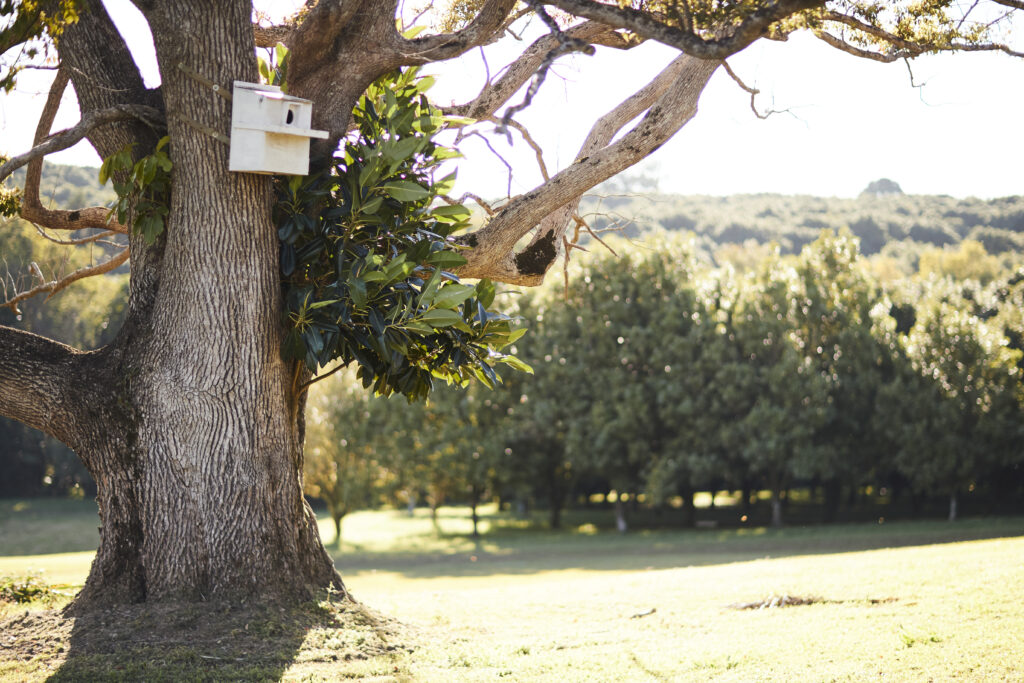
Working with nature also means using natural solutions to manage pests and protect crops. Australian macadamia growers have a long history of using biological controls. Tiny Trichogramma wasps are used to manage nut borer, while barn owls provide a natural way to control rodents.
Research continues to expand these approaches. Scientists are exploring the use of naturally occurring fungi to help manage pests, offering new ways to reduce reliance on synthetic inputs.²
At the same time, growers support pollination through both European honey bees and native Australian bees. Native bees are particularly well suited to macadamia flowers, helping ensure effective pollination in a way that is closely aligned with the local environment.
Together, these practices create orchards that are not only productive, but also rich in life. By designing systems that support biodiversity at every level, Australian macadamia growers are helping to build a more resilient and sustainable future.

 Chinese
  English